

· AFX Research
What a Subsurface or Tunnel Easement Means for Your Land
Some easements take the ground below a parcel rather than the surface. What can run down there, how the right is worded, and why nothing about it is visible from the yard.
Table of Contents
Most easement conversations look sideways across a parcel. A driveway, a power line, a strip along the back. Subsurface easements look down instead, and that is why they get missed. A transit tunnel, a bored pipeline, or a set of anchors holding back a neighbor’s excavation can occupy the ground under a lot without leaving anything on it, and the owner walks the property seeing nothing at all. They are the mirror image of the air rights and overhang easements that take the space above.
What can be down there
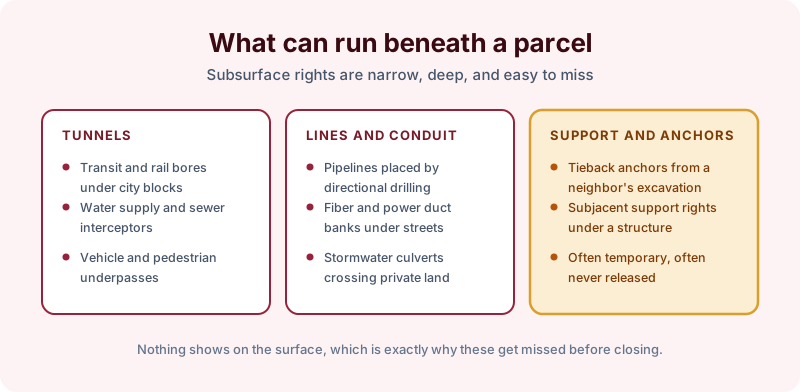
Tunnels are the obvious case. Transit bores, water supply and sewer interceptors, and vehicle or pedestrian underpasses all run beneath private land in built up areas, and the agency behind them holds a recorded right to be there.
Lines and conduit are more common and less visible. Directional drilling puts pipelines under a parcel without trenching it, duct banks carrying fiber and power run under streets and sometimes under corners of adjoining lots, and stormwater culverts cross private land in pipe rather than in an open channel.
The third category surprises people most. When a neighbor excavates for a basement or a parking structure, the shoring commonly relies on tieback anchors driven at an angle into the adjoining ground. Those anchors sit under someone else’s land, the right to place them is usually granted in a recorded agreement, and the agreement is often written as temporary. Whether anyone recorded a release when the anchors were cut or abandoned is another question entirely, and it is the same pattern seen with temporary construction easements.
How the right gets worded
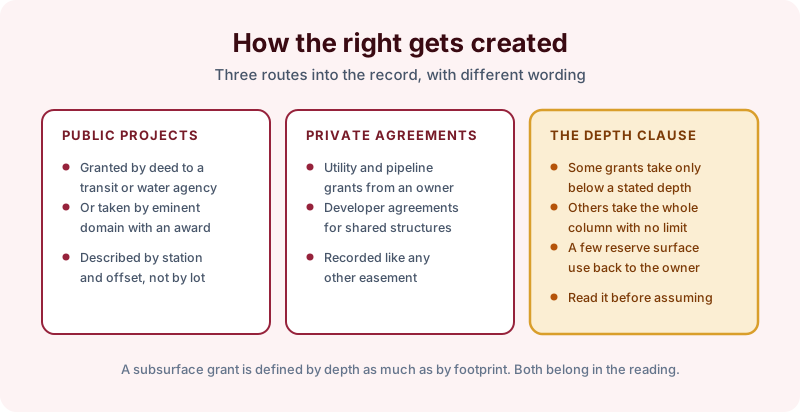
Public projects acquire these by grant or by eminent domain, and the resulting instrument is often described by station and offset along an alignment rather than by reference to the lot. That is one reason a subsurface right can be perfectly well recorded and still be hard to connect to a particular parcel without the right of way maps it references.
Private agreements look more familiar. A utility or pipeline grant signed by a previous owner, or a developer agreement covering a shared underground structure, is recorded and indexed like any other easement.
The clause that decides how much was actually given away is the depth clause. Some grants take only the ground below a stated elevation, leaving everything above it to the owner. Some take the entire column with no limit. A few expressly reserve surface use, which matters a great deal if you intend to build. Reading that language is not optional, and the answer is not predictable from the type of project.
What the search gives you
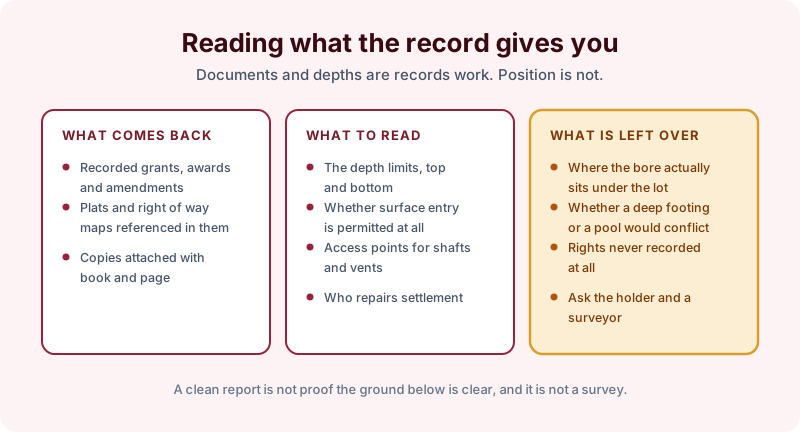
A search over the parcel returns the recorded grants, condemnation awards, and amendments found across the term searched, along with the plats and right of way maps they reference, with copies attached. From those you can read the depth limits, whether surface entry is permitted, where shafts or vents may be placed, and who is responsible if settlement damages anything above.
What the record cannot tell you is exactly where the bore sits under the lot, whether a deep footing or a pool would conflict with it, or whether a right exists that was never filed. A search reports what was recorded and found, it is not a survey, and a clean result is not proof the ground below is clear. Recording practice varies by county, so our report names the indexes reviewed. Terms run 20, 30, and 50 years, our process returns most searches in 2–3 business days, and for a downtown parcel the longer term is usually the honest choice.
The takeaway
Ground below a parcel can be spoken for with nothing showing above it. Get the recorded instruments and the maps they point to, read the depth language closely, and ask the holder and a surveyor where the structure actually runs before anyone designs a foundation. Start the order online, or send us the address and the county and we will tell you which search term fits and what it would and would not cover before anything is ordered.