

· AFX Research
What an Easement Is Worth, and What the Record Actually Shows
The ten dollars recited on a deed of easement means nothing. What drives the real number, where it gets decided, and the one thing a search genuinely contributes.
Somebody wants an easement across your land, or you need one across theirs, and the immediate question is what it is worth. That question is answered in three different places depending on who is asking, and almost none of the answer is in the land record. What the record does contribute is worth knowing, because it is occasionally decisive. The instruments themselves work the way any recorded easement does.
What drives the number
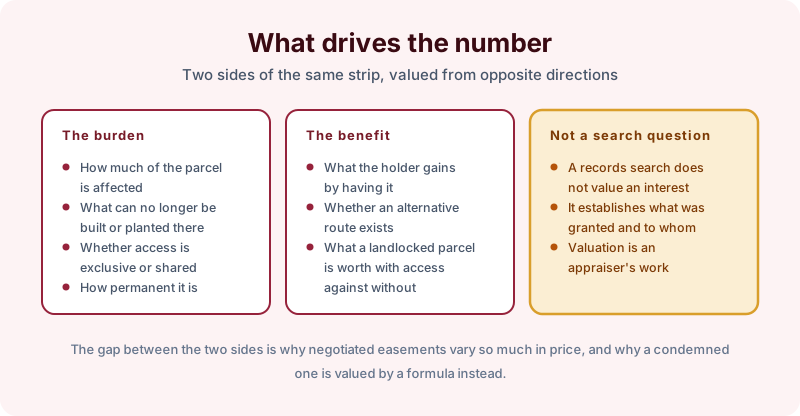
Two sides of the same strip, valued from opposite directions.
The burden is what the owner of the land gives up. How much of the parcel is affected, what can no longer be built or planted there, whether the use is exclusive or shared, and how permanent it is. A permanent pipeline easement across a buildable frontage is a different proposition from a temporary construction easement over a field.
The benefit is what the holder gains. Whether an alternative route exists is usually the biggest single factor, because a holder with options behaves differently from one without. The classic case is a landlocked parcel, where the difference between the value with access and the value without is very large indeed and both parties know it.
A records search does not value an interest. It establishes what was granted, to whom, when and over what ground. Valuation is an appraiser’s work and the legal framework around it is counsel’s.
What the record shows
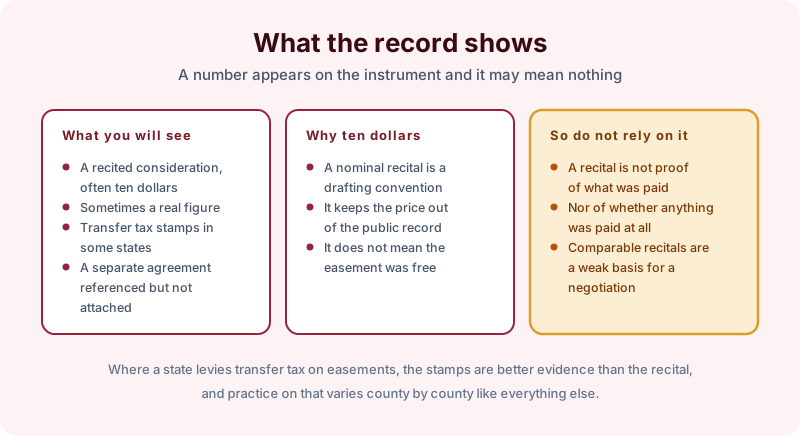
Pull a deed of easement and there will usually be a number on it, and usually that number is ten dollars.
The nominal recital is a drafting convention rather than a statement of fact. It satisfies the formal requirement for consideration while keeping the commercial terms out of the public record, and it tells you nothing about whether the grantor received nothing, a thousand dollars or a six figure sum under a separate agreement the instrument references and does not attach.
So a recital is not evidence of what was paid, or that anything was paid. Building a negotiating position on comparable recitals is building on sand. In states that levy transfer tax on easement conveyances the stamps are better evidence than the recital, and whether that applies varies by state and by county like nearly everything else in recording practice.
Where the number is decided
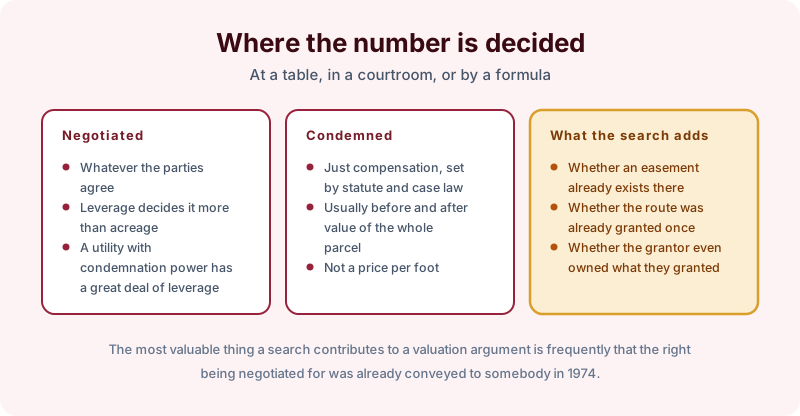
Negotiated grants are worth whatever the parties agree, and leverage decides that more reliably than acreage does. A utility or a pipeline company holding condemnation power negotiates from a strong position, because the alternative to agreeing is a proceeding rather than a refusal.
Condemned easements are valued by a legal standard rather than a price per foot. The usual approach is the difference in the value of the whole parcel before and after the taking, which can produce a number far larger or far smaller than the strip itself suggests. That framework is the one behind condemnation easements and the record.
What a search adds is factual and sometimes decisive. Whether an easement already exists over that route. Whether the same right was granted to somebody else in 1974 and never released. And whether the grantor actually owned what they are proposing to grant. Discovering that the right being negotiated for was conveyed half a century ago changes the conversation completely, and it costs a search rather than an appraisal.
The takeaway
Do not read a price off a recorded instrument, because the number on it was chosen to reveal nothing. Get an appraiser for the value and counsel for the framework, and use the search for the question neither of them can answer, which is what has already been granted over that ground. A clean report is not proof a parcel is unburdened, and a search is not a survey. Start the order online, or send us the address and the county and we will tell you which search term fits and what it would and would not cover before anything is ordered.