

· AFX Research
Who Maintains and Repairs an Easement, and Who Has to Pay
The default rule is that the holder maintains what they use, and the instrument overrides it. What a good maintenance clause covers, and what to do where none was written.
The easement itself is rarely what neighbors fall out over. What they fall out over is the gravel, the culvert that has collapsed, the snow nobody cleared and the invoice somebody sent. Those questions have answers, and the answers come from a document first and a default rule second. The pattern is the same one behind private road maintenance agreements, applied to every other kind of easement.
Who owes the upkeep
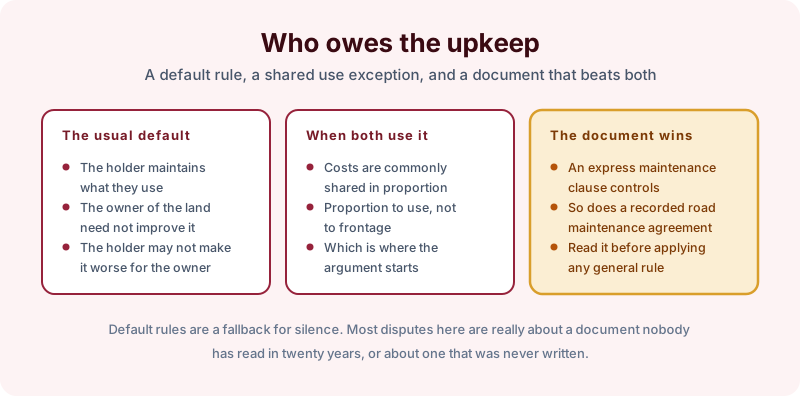
Where the instrument is silent, the general rule in most states is that the holder of the easement maintains what the holder uses. The owner of the burdened land is not obliged to improve the strip, and the holder may not make things worse for the owner while repairing it.
Where both parties use the same strip, which is the usual case on a shared driveway, costs are commonly shared in proportion to use rather than equally or by frontage. Proportion to use is a reasonable principle and an excellent source of argument, because nobody measures it.
The document beats all of that wherever it says anything at all. An express maintenance clause in the grant, a separate recorded road maintenance agreement, or a covenant imposed by a subdivision controls, and a general rule is only a fallback for silence. Where the strip was created on a plat rather than by deed, the duty is frequently set out there, as in easements created by a subdivision plat. Most disputes here turn out to be about a document nobody has read in twenty years.
What a good clause covers
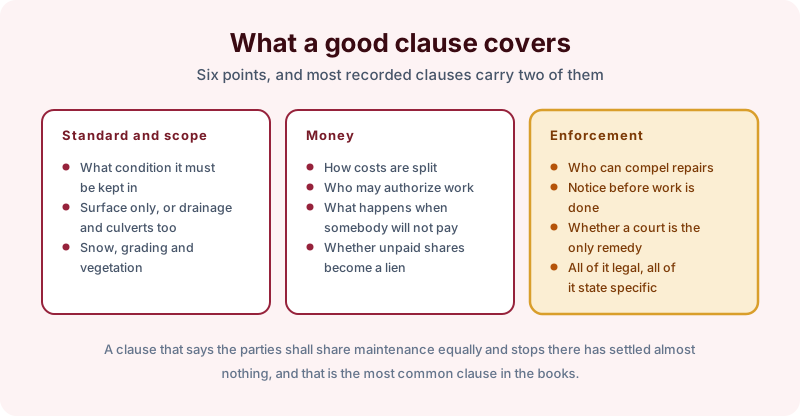
Six points, and the typical recorded clause carries about two of them.
Standard and scope. What condition the strip has to be kept in, and whether the duty covers the surface only or the drainage, culverts and vegetation as well. Snow and grading where the climate requires it.
Money. How costs are split, who is allowed to authorize work, what happens when one party will not pay, and whether an unpaid share becomes a lien on that party’s parcel. That last provision is the one that makes a clause enforceable in practice rather than in theory.
Enforcement. Who can compel repairs, how much notice is required before work is done, and whether going to court is the only remedy. All of that is legal and state specific. A clause reading that the parties shall share maintenance equally, with nothing further, has settled almost nothing, and it is the most common clause in the books.
When nothing was written
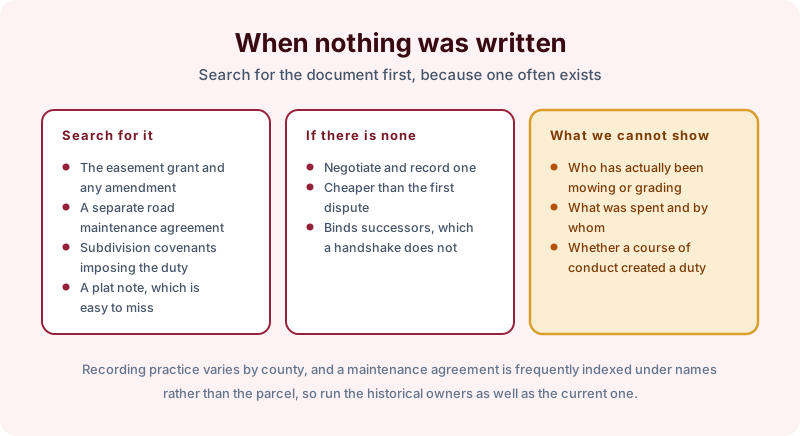
Search for the document before concluding there isn’t one, because surprisingly often there is. The grant itself and any amendment, a separate maintenance agreement recorded years later, subdivision covenants that impose the duty on all lot owners, and a note on the face of the plat, which is the one people miss. A search of the record run against the historical owners as well as the current one is what turns those up, since agreements of this kind are frequently indexed under names rather than the parcel.
If there genuinely is nothing, negotiate one and record it. It is cheaper than the first dispute, and unlike a handshake it binds whoever buys either parcel next.
What a records search cannot establish is who has actually been mowing, grading or paying. Whether a long course of conduct created an obligation is a legal question decided on evidence gathered outside the courthouse. Recording practice varies by county, and an empty result means nothing was found in the indexes searched over the term searched.
The takeaway
Before arguing about a culvert, find out whether a document already answers the question, and read the plat as well as the deeds. Where nothing exists, put one in place while everybody is still on speaking terms, and make sure it says who authorizes work and what happens when somebody does not pay. Start the order online, or send us the address and the county and we will tell you which search term fits and what it would and would not cover before anything is ordered.