

· AFX Research
Relocating or Amending an Easement: What Actually Gets Recorded
Moving a driveway or a utility line is a paperwork problem before it is a construction problem. The three routes to a change, and the document each one produces.
Table of Contents
An easement is in the wrong place. It crosses where the addition needs to go, or the gravel drive has drifted twenty feet from the strip described in 1968 and nobody noticed until a survey came back. The instinct is to move it and move on. The record does not work that way: the recorded easement keeps describing the old strip until something is recorded to replace it, and the gap between what is on the ground and what is on paper is where the dispute lives. Our note on how an easement is terminated covers ending one outright. This is the narrower question of changing one.
Three ways an easement moves
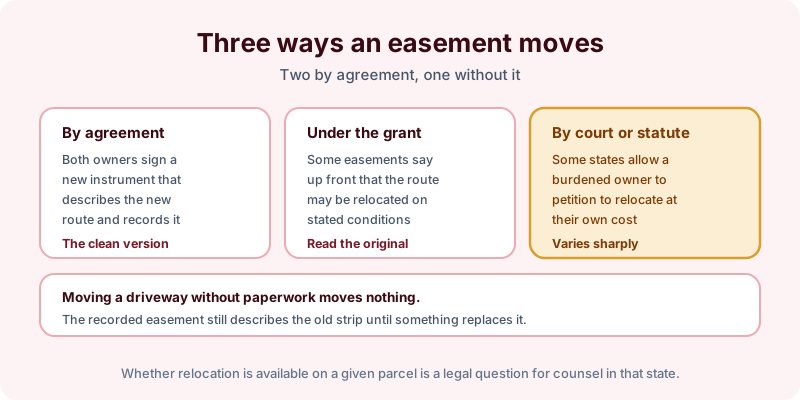
By agreement is the clean version. The owner of the burdened parcel and the owner of the benefited parcel sign a new instrument describing the new route, and they record it. Everybody who needs to consent has consented, and the record tells the story.
Under the original grant is the version people fail to check. A fair number of easements, especially utility and access grants drafted by lawyers, say up front that the route may be relocated on stated conditions: at the burdened owner’s expense, on notice, with equivalent access preserved. If that language is there, the right already exists and the argument is unnecessary.
By court or statute is the third route, and it is the one that varies most. Some states allow the owner of the burdened parcel to petition for relocation over the holder’s objection, generally at their own cost and only where the holder’s use is not materially harmed. Others do not. Whether it is available on a given parcel is a legal question for counsel in that state, not something a records search resolves.
What the new document has to contain
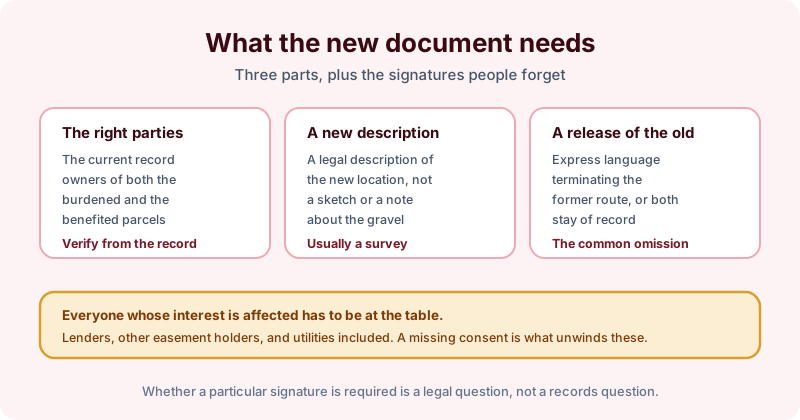
Three parts, and a fourth that gets left out. The right parties means the current record owners of both parcels, verified from the record rather than from memory, because a neighbor who sold in 2019 cannot sign away anything.
A legal description of the new location, generally from a survey. A note about the gravel, a hand-drawn sketch, or a reference to “the existing drive” produces an instrument that is hard to enforce and harder to insure.
A release of the old route is the common omission. Without express language terminating the former strip, both descriptions remain of record and a future search returns two easements, which is exactly the ambiguity the relocation was meant to fix. That is also how these show up as title insurance exceptions, covered in our note on easements and title insurance exceptions.
And the fourth item: anyone else whose interest is affected has to be at the table. Lenders on either parcel, other easement holders sharing the strip, and utilities with their own grants. A missing consent is the usual reason one of these unwinds years later.
What the search shows
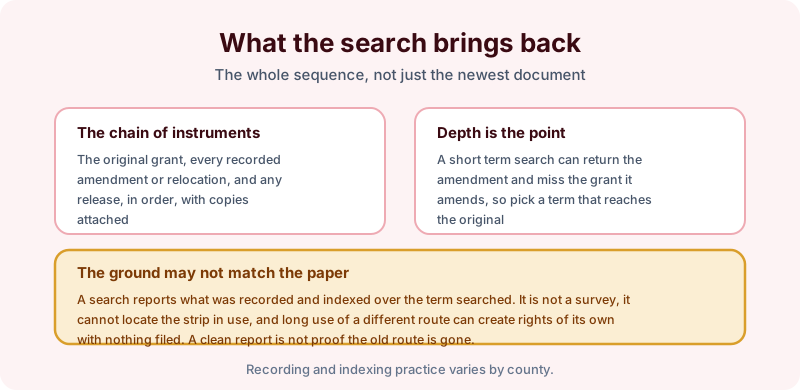
You want the whole sequence rather than the newest document, so choose a search term that reaches back past the original grant. A short search can return an amendment and miss the easement it amends, which tells you almost nothing. Turnaround is 2 to 3 business days.
The report is what was recorded and indexed over the term searched, with copies. It is not a survey, so it cannot locate the strip actually in use, and long use of a different route can create rights with nothing filed at all, as our note on prescriptive easements explains. A clean report is not proof the old route is gone.
The takeaway
Before negotiating a relocation, read the original grant to see whether the right is already there, and make sure whatever gets recorded describes the new route and releases the old one. Start the order online, or send us the address and the county and we will tell you which search term fits and what it would and would not cover before anything is ordered.