

· AFX Research
Scoping an Easement Search Before a Commercial Loan Closing
What a lender needs answered about access and burdens, when in diligence to order the search, how to pick the term, and what the record cannot settle for the file.
Commercial closings fail on access more often than on price. A parcel with a building, a tenant, and an appraisal can still be a problem asset if the driveway crosses land the borrower does not own under an arrangement nobody ever recorded. The lender’s question is narrow and specific. What does the record say this property may do, and what may be done to it? That is a different question from the boundary question covered in our note on encroachment or easement, and it is usually the more urgent one.
What the file actually needs answered
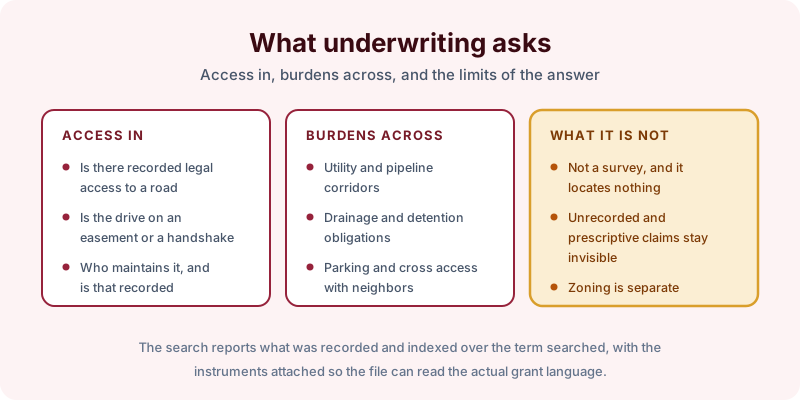
Access first. Is there recorded legal access from the parcel to a public road, and does it run in favor of this parcel rather than in favor of a prior owner personally? A driveway that has been used for forty years under nothing but neighborly agreement is a real risk to a lender, because the next neighbor is under no obligation to be neighborly. The problem and its usual fix are covered in our note on landlocked property and easements by necessity.
Then the burdens. Utility and pipeline corridors, drainage and detention obligations, and cross-access or shared parking agreements all constrain where a building can expand and what a future buyer can do. On a loan underwritten against an expansion plan, a corridor across the only developable side of the site is a material fact. The same is true of a drainage easement that a future addition would have to be designed around, since the cost of that redesign lands on whoever owns the property when the plan is finally built.
Then maintenance. Access that exists on paper but has no recorded maintenance arrangement is a future dispute, particularly on a shared drive serving several commercial users, as our note on private road maintenance agreements describes.
When to order it
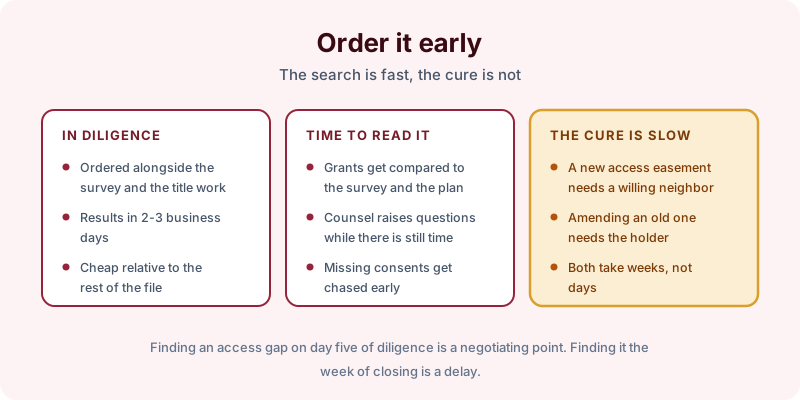
Early, alongside the survey rather than after it. The asymmetry is the whole argument, because the search takes 2-3 business days and costs a fraction of the survey, while curing an access defect requires a willing neighbor, a negotiated grant, and a recording, which takes weeks.
Ordered during diligence, an access gap is a negotiating point and a repair the seller can be asked to make. Ordered the week of closing, the same gap is a delay with a rate lock running against it. Reading the grants alongside the survey is also what makes both documents useful, since the survey shows what the surveyor found and the record shows what was granted, and the two do not always agree. A corridor drawn in one location on a fifty year old plan and used in another is a common version of that mismatch, and it is far easier to reconcile while both parties still want the deal to close.
Choosing the term
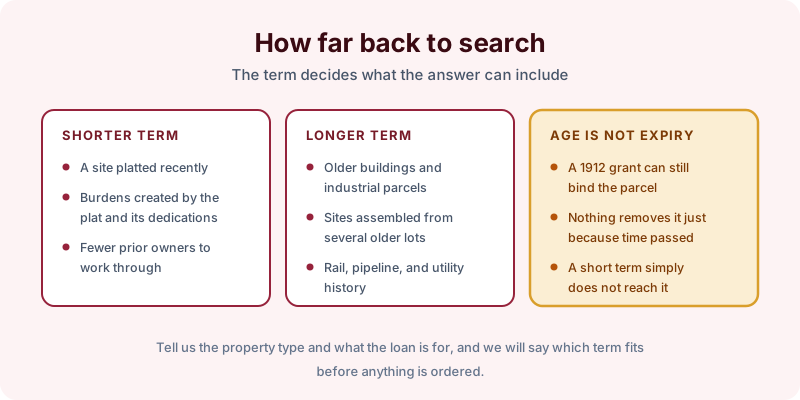
We run 20-year, 30-year, and 50-year searches at $325, $525, and $675. On a recently platted site in a modern business park, the shorter term usually reaches everything that matters, because the burdens were created by the plat. On an older building downtown, on an industrial parcel with rail history, or on a site assembled from several older lots, the longer terms earn their cost, because easements do not expire from age. A grant made in 1912 can still bind the parcel today, and a short term simply does not reach far enough to see it.
Two limits belong in the file. A records search is not a survey and does not locate anything on the ground. And prescriptive claims and easements by necessity are frequently created with no recorded instrument at all, so a clean report is never proof the parcel is unburdened. Recording and indexing practice varies by county, so the report states the term searched and the indexes reviewed, and our guarantee covers the work rather than the completeness of the county’s own filing.
The takeaway
Order the easement search when diligence opens, match the term to the age of the parcel rather than the size of the loan, and read the grants against the survey. Start the order online, or send us the address and the county and we will tell you which search term fits and what it would and would not cover before anything is ordered.