

· AFX Research
Hunting and Recreational Access Easements: What Is Recorded
How access to hunt, fish, or cross rural land gets created, which forms survive a sale, and what a county records search will and will not show about them.
Table of Contents
Rural land changes hands with a set of habits attached. Somebody has always driven the two-track to the back forty, a club has hunted the ridge since the 1970s, and the neighbor puts a stand in the same corner every November. Some of those habits are recorded rights that will bind you the day you close. Others are contracts that end, or permissions that were never written down at all. Sorting them out starts with the county record.
Three ways people get on the land
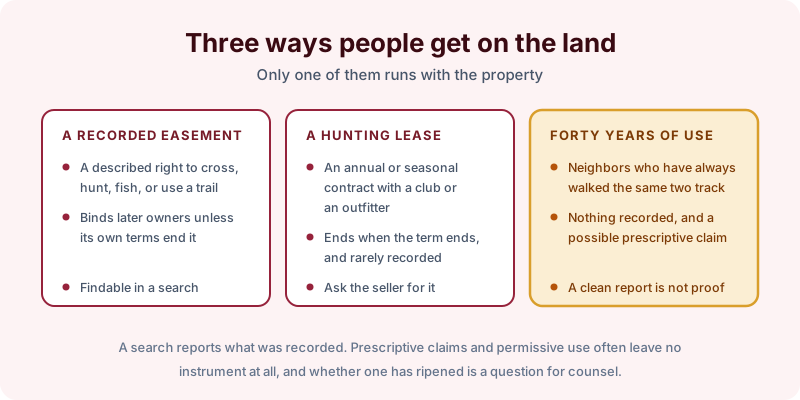
A recorded easement is the durable form. It describes a right to cross, hunt, fish, or use a trail, and it binds later owners unless its own terms bring it to an end. A hunting lease is a contract, usually annual or seasonal, between the owner and a club, an outfitter, or a neighbor. Leases are rarely recorded, they expire, and they are the seller’s paperwork to produce rather than the recorder’s, which is a distinction our post on easement versus license works through in more detail.
Long permitted use is the third and most contentious. Forty years of walking the same lane creates no recorded instrument, but depending on the state and the facts it may support a claim of prescriptive use. Our post on prescriptive easements covers why a clean search is never proof that a parcel is unburdened.
Read the grant closely
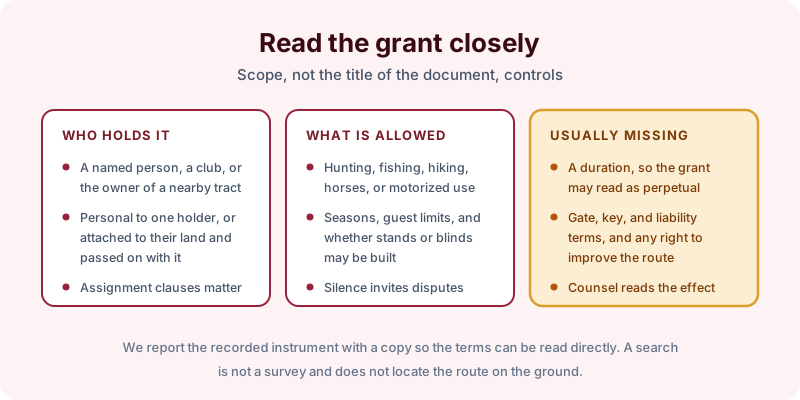
When there is a recorded instrument, the terms matter far more than the caption. Start with who holds the right. An easement granted to a named person or club may be personal to that holder, while one granted to the owner of a nearby tract is likely attached to that land and passes with it. That difference between an easement in gross and an easement appurtenant is the subject of our post on appurtenant versus in gross, and on recreational grants it decides whether the right can be sold, assigned, or handed to a commercial outfitter.
Then read the scope. Which activities are covered, whether motorized vehicles are included, whether stands, blinds, or camps may be built, how many guests are allowed, and whether the grant is limited to a season. Older instruments are frequently silent on all of it, and silence is where disputes grow.
Watch for what is missing. Many recreational easements state no duration at all, which can make them perpetual as drafted. Gate and key arrangements, liability allocation, and any right to grade or improve a route are commonly absent as well. We supply a copy of the instrument so those terms can be read directly, but what the language means for your plans is a question for counsel in that state.
Scoping the search
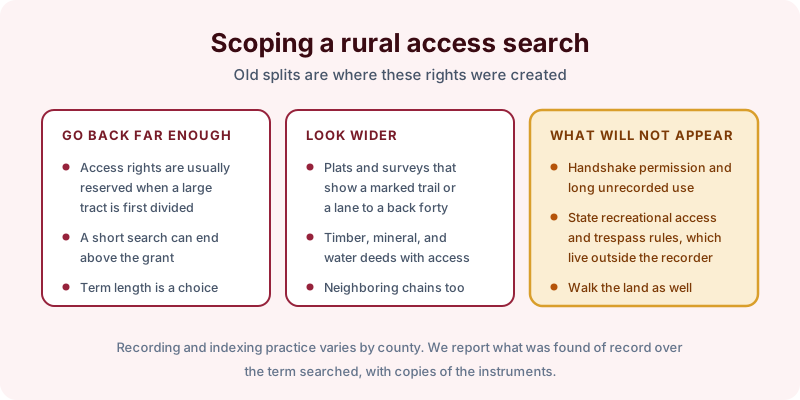
Recreational rights are usually created at the moment a large tract is first divided, which makes search depth the practical question. A short search on a parcel that was carved out of a 600-acre farm in 1962 can end above the reservation that matters. Our easement search packages run 20, 30, and 50 years for that reason, and on rural acreage with an old family chain the longer terms earn their cost.
Look wider than the deeds, too. Plats and recorded surveys sometimes show a lane or trail as a marked feature, and timber, mineral, or water conveyances routinely carry access rights for the benefit of the interest holder. Neighboring chains matter as well, because the grant that burdens your parcel may be indexed against the tract next door.
Two limits are worth stating outright. A records search reports what was recorded and indexed in that county, so handshake permission and unrecorded use will not appear. And a search is not a survey: it will not tell you where a described route actually runs on the ground, which on wooded acreage is often the question that matters most. Our process explains how the report is assembled and what arrives with it.
The takeaway
On rural land, ask three questions before closing: what is recorded, what leases are running, and who has simply been coming and going for years. The first is what we search, and it is the one that will still be true after the sale. The other two need the seller’s file and a conversation with the neighbors.
Start the order online, or send us the address and the county and we will tell you which search term fits and what it would and would not cover before anything is ordered.