

· AFX Research
Sewer Line and Septic Easements: Who Can Cross Your Land
Public mains, private laterals, and drain fields on someone else's lot. What the county record shows about wastewater rights, and what it cannot tell you.
Table of Contents
Wastewater easements are the least glamorous burden on a parcel and among the most expensive to discover late. A buried line nobody documented, a drain field sitting on the neighbor’s back acre, a district easement that forbids a garage exactly where the garage was planned: each of these is a recorded-or-not question, and each of them changes what an owner can build. Unlike the drainage easements that move stormwater, these carry sewage, which makes both the access rights and the repair obligations sharper.
Three kinds of wastewater burden
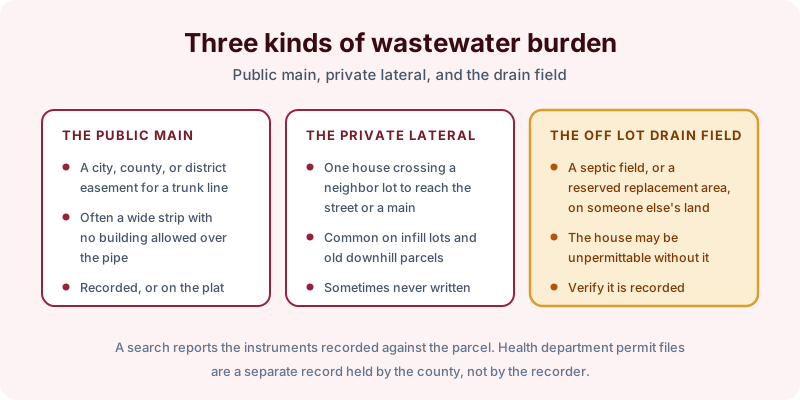
The public main is held by a city, county, or sanitary district, usually as a wide strip with a flat prohibition on building over the pipe. These are typically recorded or dedicated on a plat, and they behave like the utility easements most owners already expect.
The private lateral is the one that surprises people. On infill lots, hillside parcels, and old town blocks, a single house sometimes has to cross a neighboring lot to reach the street or a main. Where a right was granted, there is an instrument. Where the arrangement dates to the 1940s and both houses were once owned by the same family, there may be nothing at all.
The off-lot drain field is the highest-stakes version. A septic field, or a reserved replacement area required by the health department, may sit on land the house does not own. If that right is not recorded, the property can be effectively unpermittable when the system fails, and no amount of goodwill from the current neighbor fixes it for the next one.
What the instrument should say
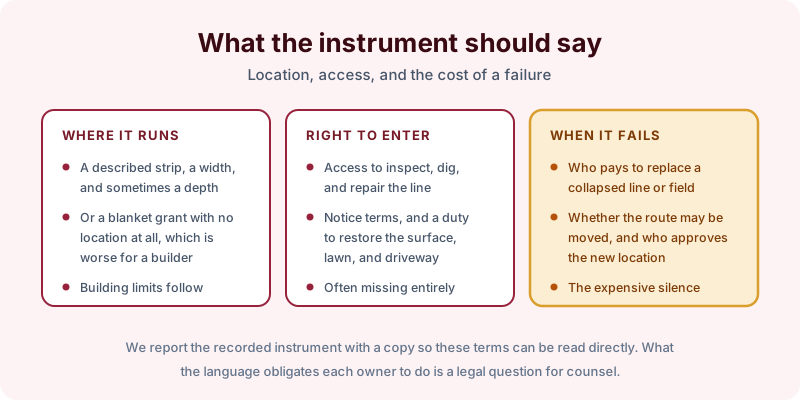
Three items decide how much the easement will cost you in practice. Location comes first: a described strip with a width, and ideally a depth, tells a builder where the buildable area really is. A blanket grant with no described route is worse than a narrow one, because it clouds the whole parcel, and our post on building near an easement covers how setbacks get calculated from what the instrument says.
Access is second. The holder needs a right to enter, inspect, and dig, and a well-drafted instrument pairs that with notice terms and a duty to restore the surface, the lawn, and any paving. Older grants frequently say nothing about restoration.
Failure is the expensive silence. Who pays to replace a collapsed line or a failed field, whether the route may be relocated, and who approves a new location are all questions many recorded easements simply do not answer. We supply a copy of the instrument so the terms can be read directly, though what the language obligates each owner to do is a legal question for counsel in that state. Our post on private road maintenance agreements looks at the same cost-sharing problem in a different setting.
Where to look
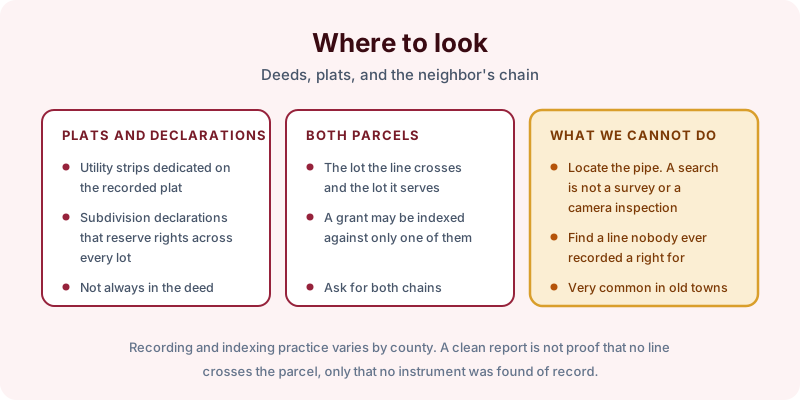
Deeds are only part of it. Utility strips are commonly dedicated on the recorded plat rather than granted by a separate instrument, and subdivision declarations often reserve rights across every lot in the tract, which our post on easements created by a subdivision plat explains in more detail. Both belong in the search.
Search both parcels where a private lateral is involved. A grant may be indexed against the burdened lot, the benefited lot, or in a poorly indexed county, in a way that only turns up in one of the two chains. If you are buying either side of that arrangement, ask for both.
Then the limits, stated plainly. A search reports what was recorded and indexed over the term searched. It will not locate the pipe, because a records search is not a survey and not a camera inspection, and it cannot produce a right that nobody ever recorded. Health department permit files and as-built system records are held by the county health office, not the recorder, and they are worth requesting separately. Reports come back in 2–3 business days, and our guarantee covers the search itself.
The takeaway
Ask two questions before closing on any property served by septic or crossed by a sewer line: what does the record show, and does the physical system match it. The first is what we search, and it is what will bind the next owner. The second needs a septic inspection and, on an old lot, a conversation with the neighbor whose land the line crosses.
Start the order online, or send us the address and the county and we will tell you which search term fits and what it would and would not cover before anything is ordered.